
Welcome lens
Can a late arrival see a path in?
Look for shared information, a calm first decision, and a way to ask a question without feeling like the round has stopped.
Noticeentry moments
Prepareone spare seat
Round Table Ledger is a practical notebook for choosing games, reading rules with less friction, and giving every player a useful place at the table.

People, time, energy, space. The game comes after.
Use a lens to inspect what the group needs right now. Choose any tab; the default starts somewhere other than the first lens.
Look for shared information, a calm first decision, and a way to ask a question without feeling like the round has stopped.
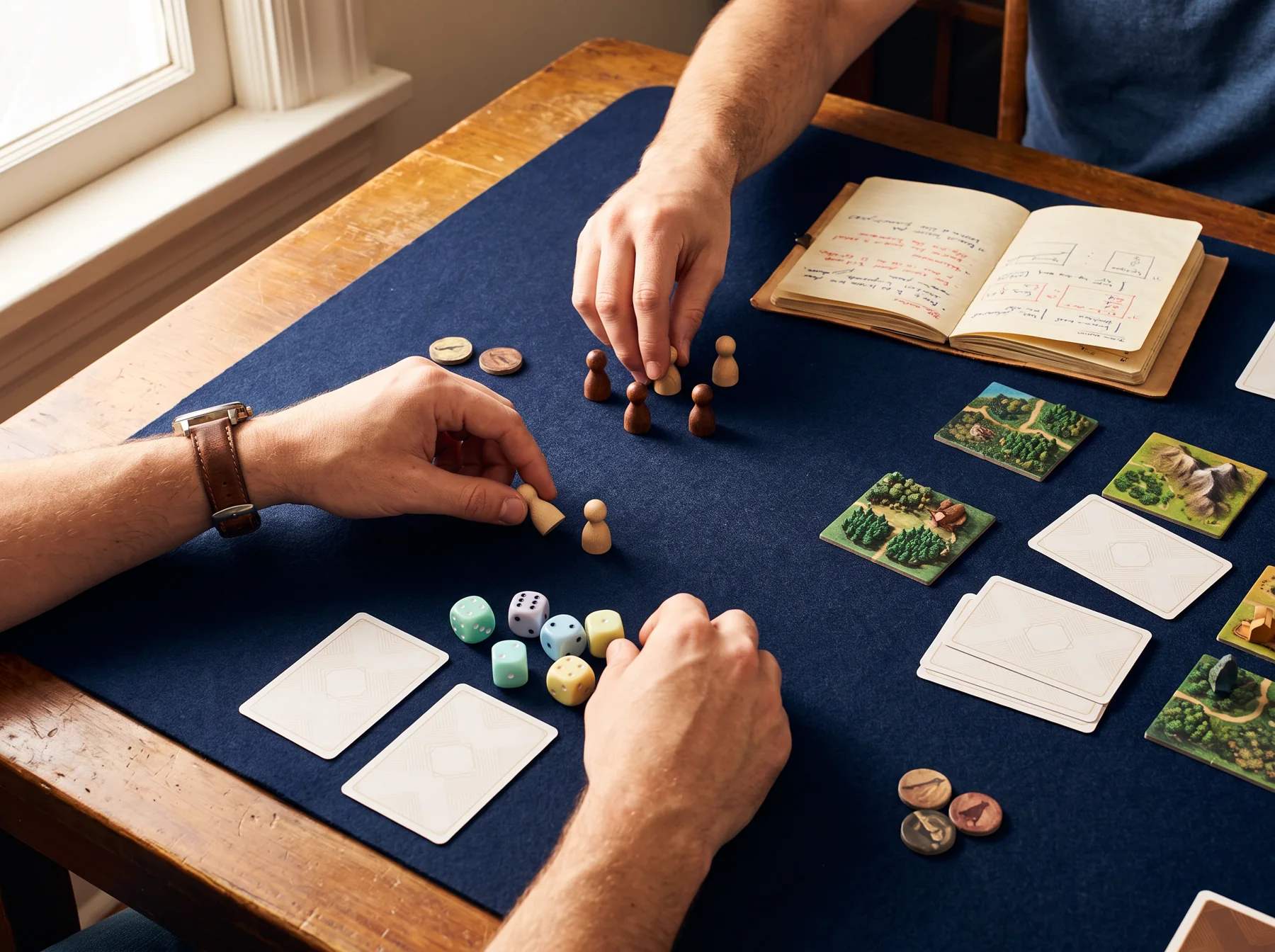
Clear rhythm beats quickness. Name the turn shape, keep its parts in the same place, and let players see which choice is next.
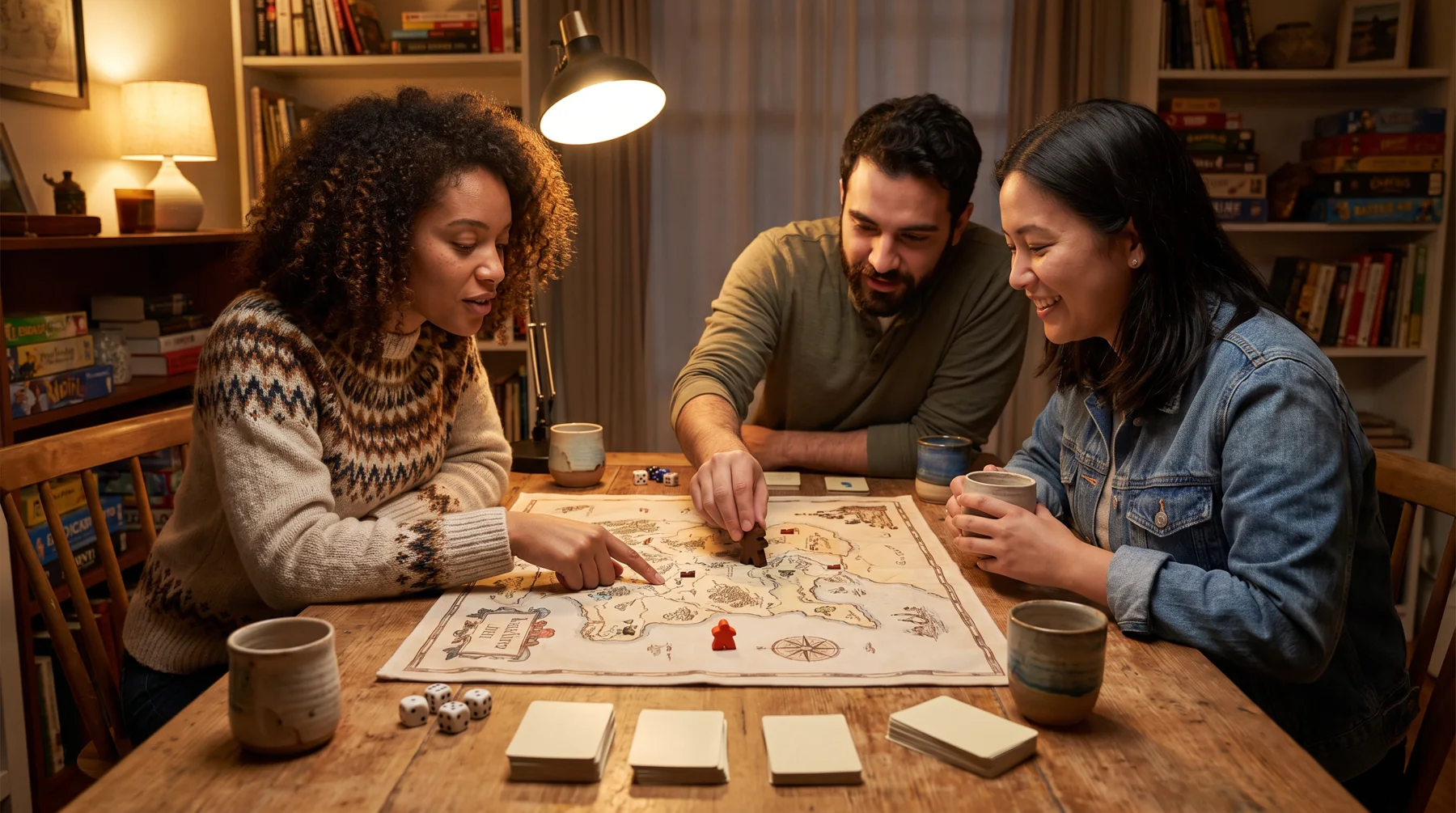
Some games reward quiet calculation; others produce plans out loud. Match the game’s social volume to the evening rather than forcing either one.
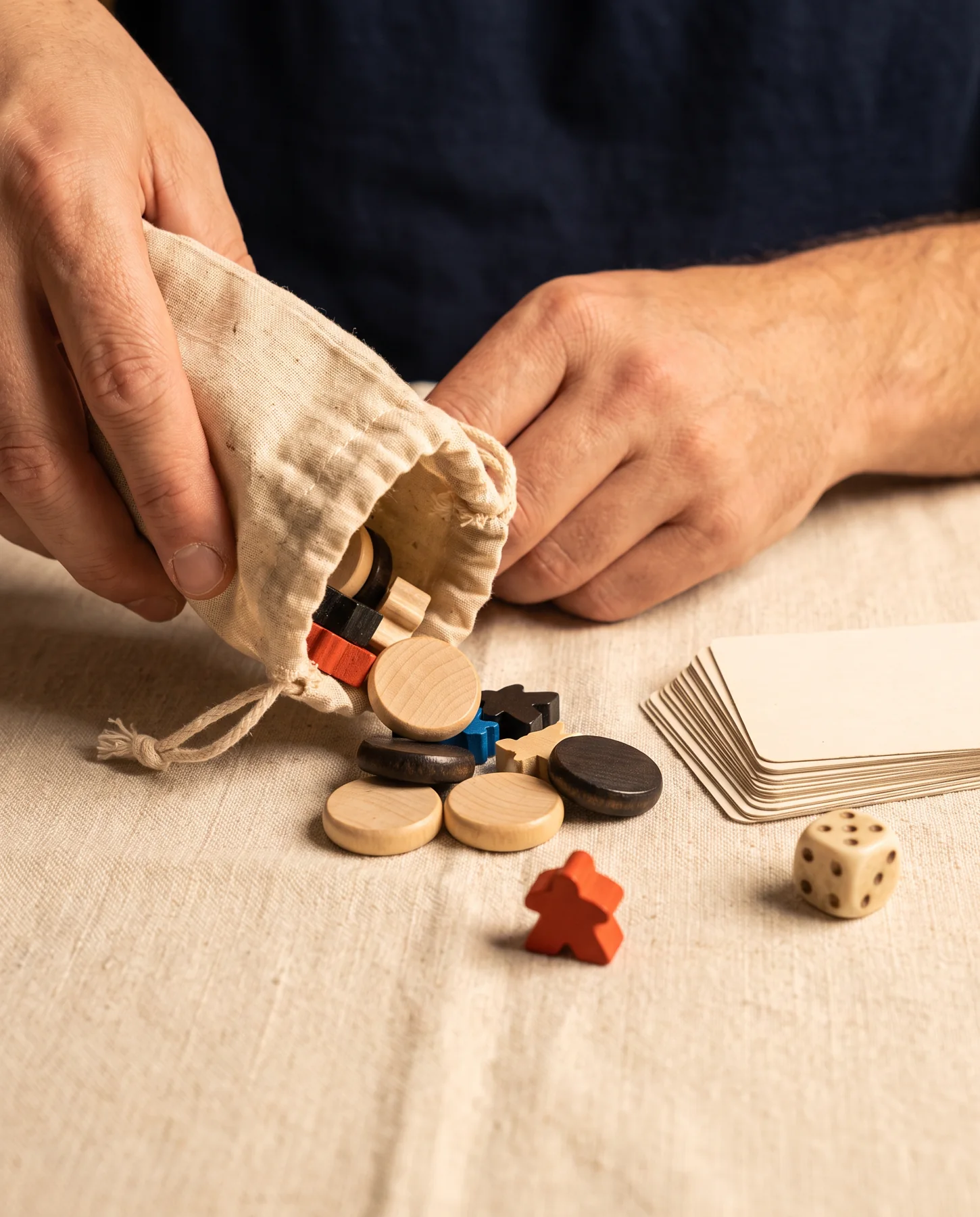
A memorable trace may be a clever shared recovery, a small story, or a surprise. Leave a minute to name it before packing components away.
This is a route through selection, not a rating system. Keep the decisions concrete and the language kind.
How many people are here? What is their energy? Is anyone new to the group, the genre, or the language of games?
Measure the real surface, the light, the chairs, and the interruption risk. A promising game can become awkward in the wrong setup.
Choose the smallest useful explanation. Give the objective, turn cycle, and one live example before revealing exceptions.
Filter the cards by the moment you are solving. The selected control is intentionally not the first option.
A familiar game makes room for a new tablemate, a new snack, or a new conversation.
Touch the board area, card row, or piece as you describe it. A visible reference reduces rule recall.
It becomes a landing place for drinks, rule reminders, and the components nobody should have to hold.
One illustrated turn supplies context that a list of actions cannot carry on its own.
Do people want a clean ending, a puzzle to revisit, or a story to recount on the walk home?
Shared access makes checking a detail ordinary rather than a request for permission.
Before the teach, give each component a job and a home. The table becomes easier to read at a glance.

 Chance stays visible
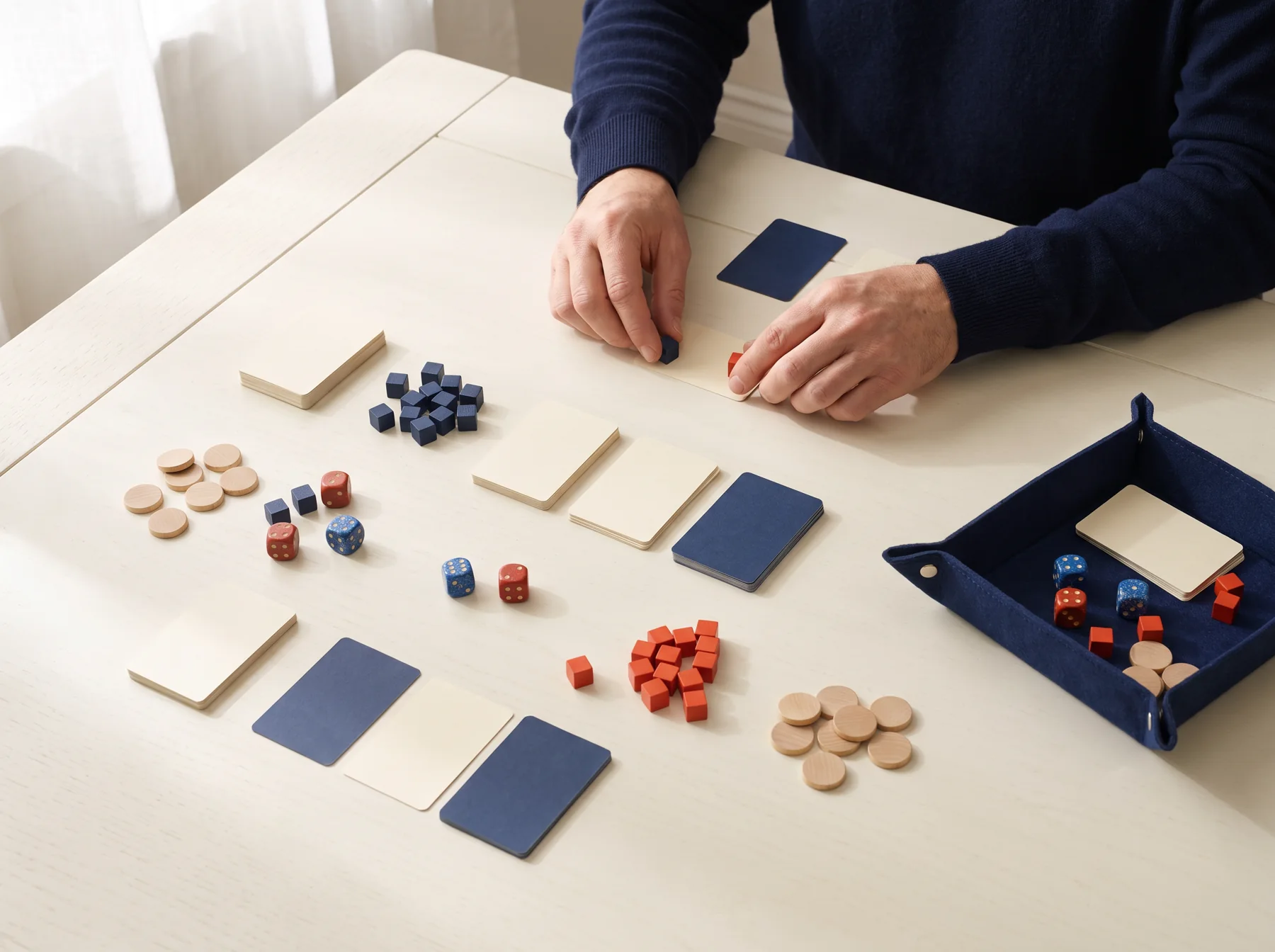 Group by functionGive each piece a home
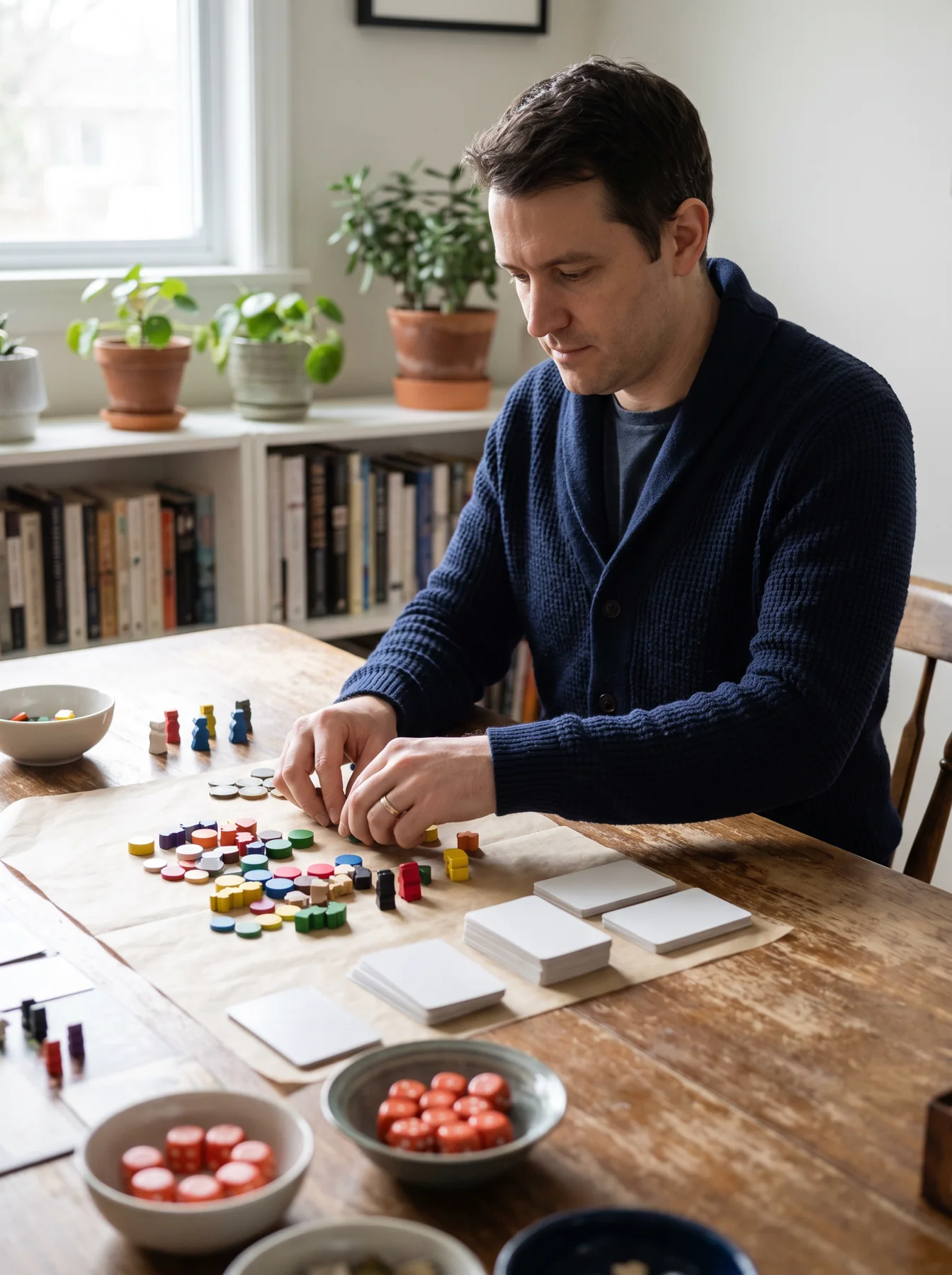 Set before guests arrive
A handbook is reference material. A teach is a tiny piece of event design with a clear beginning, middle, and handoff.
Give one sentence about what players are trying to create, protect, solve, or discover together.
Point to what repeats. Most people need the turn cycle before they need every option inside it.
Demonstrate a borderline choice or a small constraint, then invite questions while nothing is at stake.
Let the game begin. Keep your role as a reference, not a narrator who owns every decision.

Keep this list local to your browser. It is a light prompt for a calmer departure, and it does not save or send any personal information.
Good hosting is often small choreography: placement, pacing, permission, and a moment to pause.
Keep a chair usable and its view open before the table fills with boards or bags.
Place shared information in the middle and rotate it before anyone has to ask.
Normalize a quick rules check or water break; neither is a failure of momentum.
Make room for one observation after play, especially from someone who spoke less.
Four common questions from people who want their tabletop time to feel more generous and less performative.
This form prepares a message draft addressed to [email protected]. It does not send anything automatically; you will review it in your own mail app.